
One of the tools based on artificial intelligence that has found mass application in everyday life is a virtual assistant called ChatGPT. It was developed by the American research laboratory "OpenAI" and is available from November 2022. Today, there is almost no person who has not heard or used ChatGPT, and the fact that it took only five days for the number of users to exceed one million tells us that it is a technology that is widely accepted around the world.
GPT-3 (Generative Pretrained Transformer 3) is a state-of-the-art autoregressive language model for human-like text generation. This is one of the largest and most powerful language processing models to date, and over $10 billion has been spent to train it. ChatGPT can answer questions, solve complex and programming problems, write essays, give suggestions and much more. However, the model is far from perfect. Some of the limitations are:
- The data and knowledge available to ChatGPT is limited until 2021
- ChatGPT sometimes generates incorrect answers that sound very reasonable and accurate
- The model sometimes gives biased answers to questions.
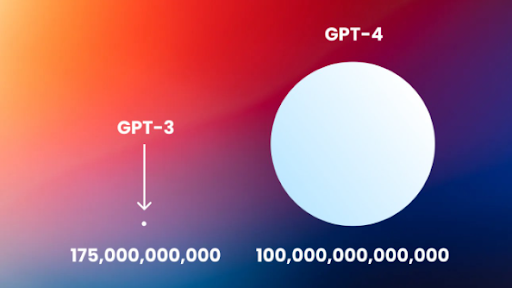
175 billion parameters were used to train the ChatGPT-3 version, however, for users willing to subscribe for $20 per month, a version of ChatGPT-4 trained on 100 trillion parameters is available. ChatGPT-4 is a version that is many times more powerful and smarter than the previous one.
We are witnessing that this technology will continue to improve, become smarter and more accessible. Interestingly, a team from Stanford trained a similar language model (Stanford Alpaca) for less than $600. The original estimate was that only in 2030, such models would be able to be trained at low costs. So, what was supposed to happen in eight years, happened in just five weeks. With fierce competition from other tech giants (Apple, Google, Amazon, Baidu) developing their models as well as a bunch of startups dealing with artificial intelligence, we can expect AI to play an increasingly important role in our lives in the future. Industry experts and tech investors say AI won't completely replace humans anytime soon, but jobs will be transformed as artificial intelligence becomes more accessible. For this reason, it is necessary to improve knowledge and learn about the possibilities that such models provide.
Although artificial intelligence offers many advantages and benefits, it is necessary to take into account its potential negative impacts on society and the environment. Therefore, it is important that the development of artificial intelligence is guided by ethical principles and that the technology is used in a way that will bring the greatest benefit to society as a whole.
Author: Petar Damnjanović